Case Study

Improving fleet utilization and reducing costs with AI-powered scheduling

How we used customer data to uncover savings by evaluating alternative scenarios

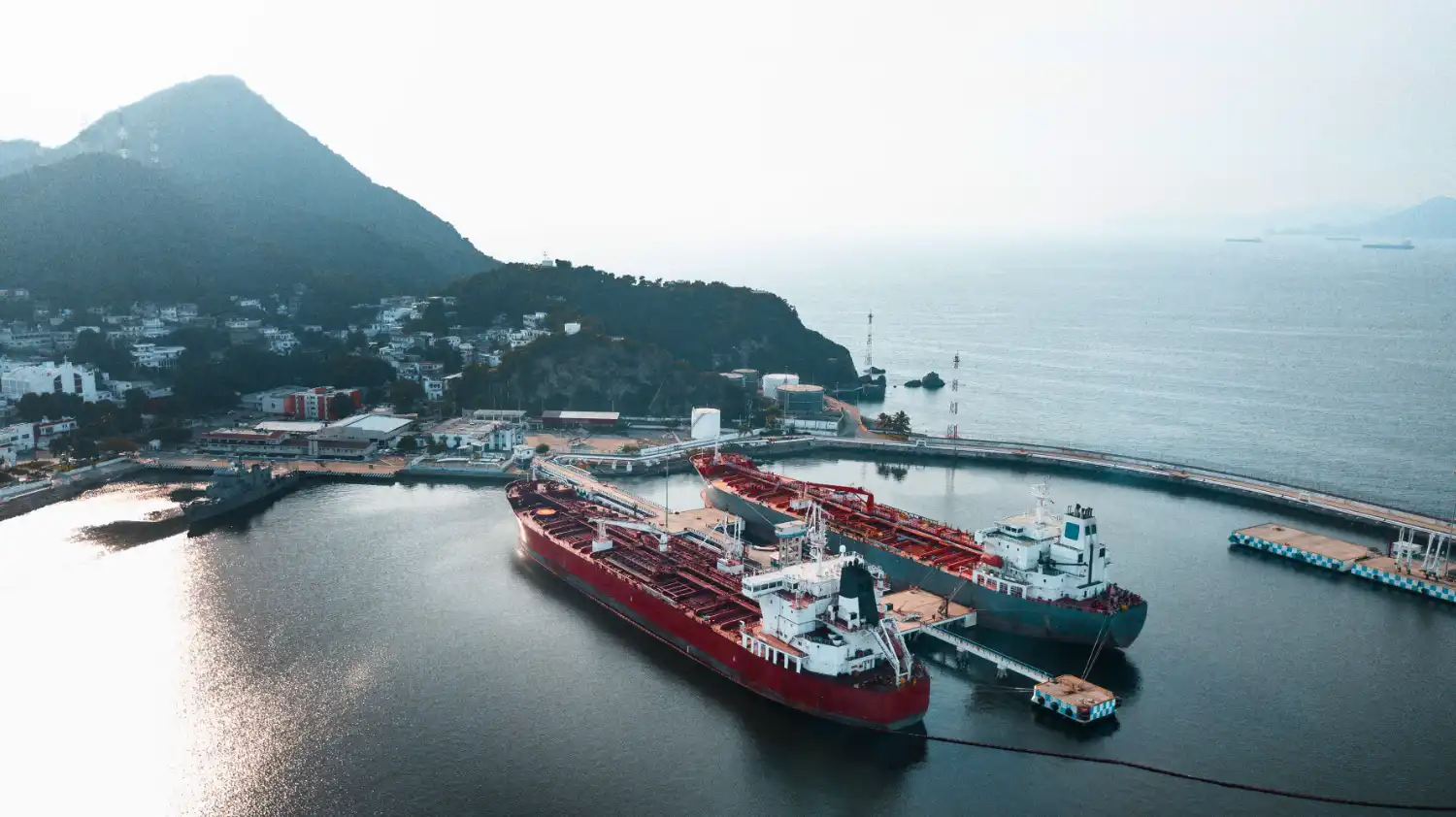
Ships in port

hypothesis

Manual scheduling limits optimization potential

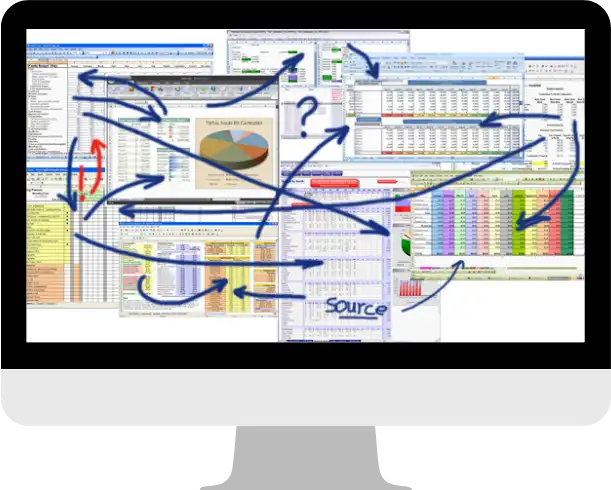
Manual scheduling limits optimization potentialA tanker operator approached Seaber with a challenge that resonates across the maritime industry: their voyage planning and fleet optimization processes were entirely VMS and spreadsheet-based, like for many shipowners and charterers in the bulk, tanker and breakbulk industry.

Despite strong internal capabilities, the customer suspected that better results were possible if data could be analyzed more dynamically.

In particular, they were looking for a way to:

  • Increase vessel utilization
  • Reduce the total cost of operations (daily costs, port, and bunker)
  • Improve the percentage of laycans met
  • Determine whether their current fleet size was appropriate

The chartering team was open to testing new technology, but only if the value could be proven convincingly and practically, with real data and realistic constraints.

With a fleet of interchangeable vessels and around 40–50 voyages over a typical 3-month period, their planning was constrained by human limits: too many variables, too little time, and a persistent assumption that “it’s already optimized.”

The results in this study show how we used the customer’s benchmark and created various scenarios in the Seaber platform to identify vast savings.
“This is exactly the approach I wanted to see. The industry always says: ‘We can’t do it differently, it’s already optimized.’ But this shows that we can do better.”
Customer's representative

objective

Prove that AI-powered scheduling can outperform Excel

The objective was to validate whether Seaber’s AI-powered scheduling and planning tool could deliver measurable improvements over their traditional approach. Specifically, the charterer wanted to:

  • Benchmark their original schedule against scenarios generated by Seaber
  • Maintain key operational requirements such as agreed laycans,  cargo compatibility, and port restrictions
  • Determine the impact of adjusting constraints, such as allowing small delays or re-letting cargoes
  • Estimate cost and efficiency gains based on validated historical data
  • Use results to inform future chartering decisions, especially regarding long-term charters.

Seaber was asked to structure a practical study around these goals while ensuring transparency and reliability throughout the process.

The methodology used in the study was co-designed with the customer to ensure it accurately represented their reality. Every assumption, constraint, and scenario was reviewed and agreed upon in advance. This collaborative approach ensured that the outcomes were not only reliable but also validated by the customer as a legitimate benchmark against their original approach.

Super messy Excel UI

process

Turning historical data into optimized scenarios

Step 1: Data preparation & focus period selection

The operator provided detailed records of historical voyages. A 3-month period with about 40–50 voyages was selected to create a manageable yet representative test set. Seaber reformatted this data, clarified planning assumptions, and built a custom cargo import template to streamline data integration.

Step 2: Scenario mapping

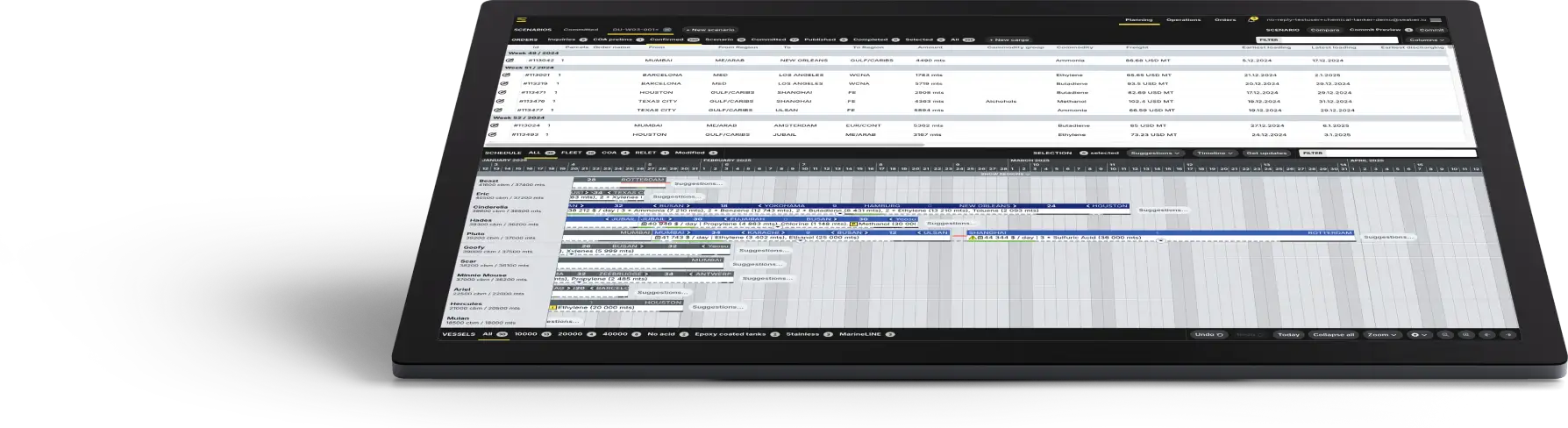
Using the customer’s original plan, Seaber replicated the full schedule inside the platform, creating a baseline scenario.

This allowed a direct, side-by-side comparison between the status quo and the new optimized versions.

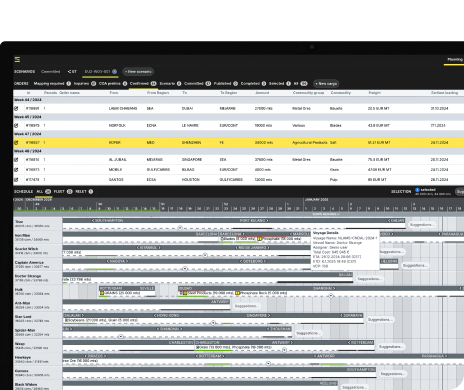
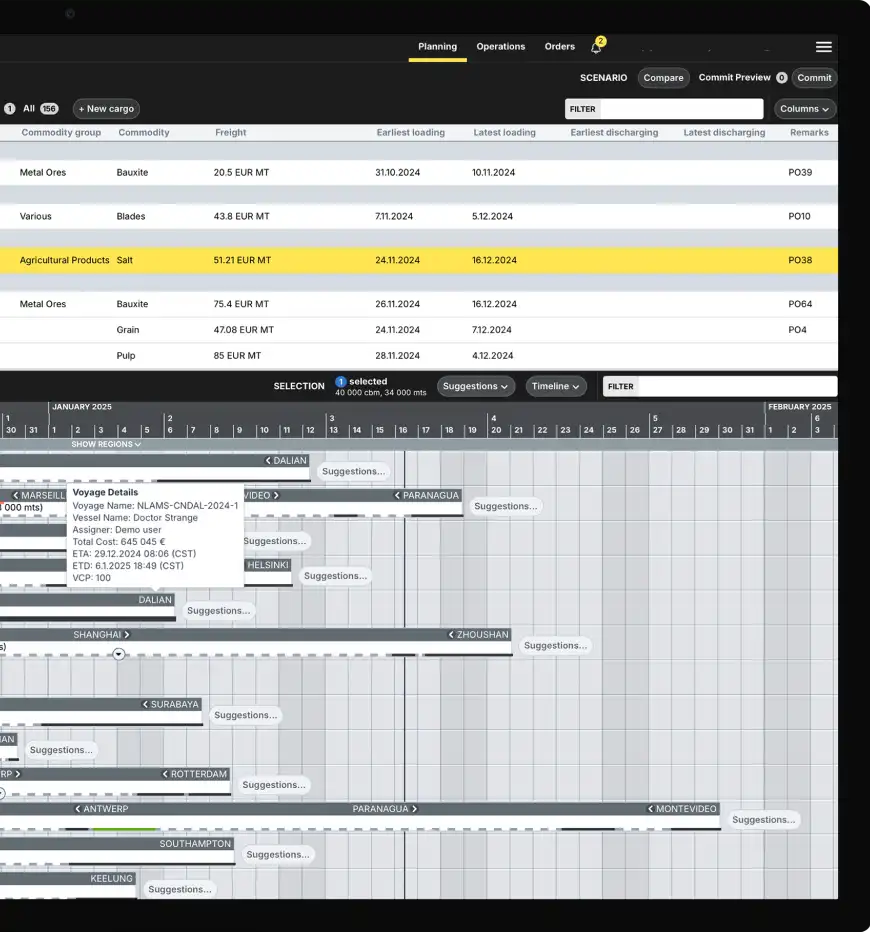
Seaber UI

Step 3: Seaber optimization process

Seaber then used its built-in scheduling tool to generate alternative scenarios. These included:

  • Scenario 1: Allowing short delays to increase flexibility
  • Scenario 2: Minimizing delays, but still with some tolerance
  • Scenario 3: No delays accepted

Step 4: Interpretation and review

The Seaber team worked closely with the customer to review each result. Potential violations of laycan were individually assessed and accepted or rejected based on operational priorities. This collaborative step was essential to ensure the results aligned with real-world feasibility.

Our customers are proven to save 3% in operating costs

Read more at:
Seaber.io/customers

outcome

Flexibility enhances planning and reduces costs

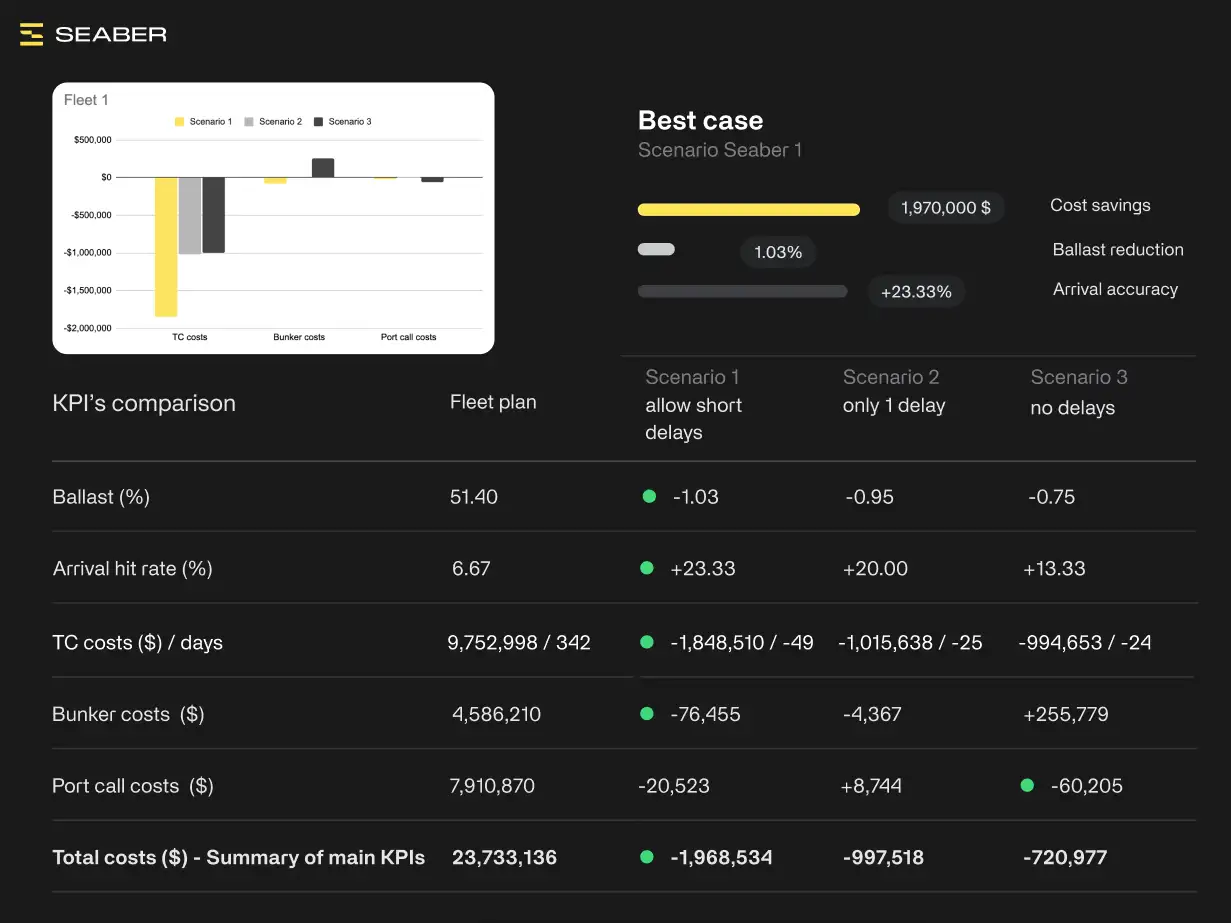
Best case: Scenario 1 with short delays allowed created 8.3% cost savings.

These scenarios proved that modest changes in flexibility, like allowing brief delays, could significantly enhance planning without major operational disruption.

Seaber’s alternative planning demonstrated the potential to free up 49 vessel days while transporting the same cargoes as in the benchmark case.

Allowing short delays of less than a day reduced ballast and bunker costs, delivering meaningful savings while also lowering CO₂ emissions, in line with the industry’s drive to cut climate impact.

Even in the strictest “no delays” scenario, a 3% cost saving was achieved, already a significant business impact. By introducing short delays, the potential for even greater efficiency and sustainability gains became evident.

outcome

Smart timing and re-letting optimize fleet utilization

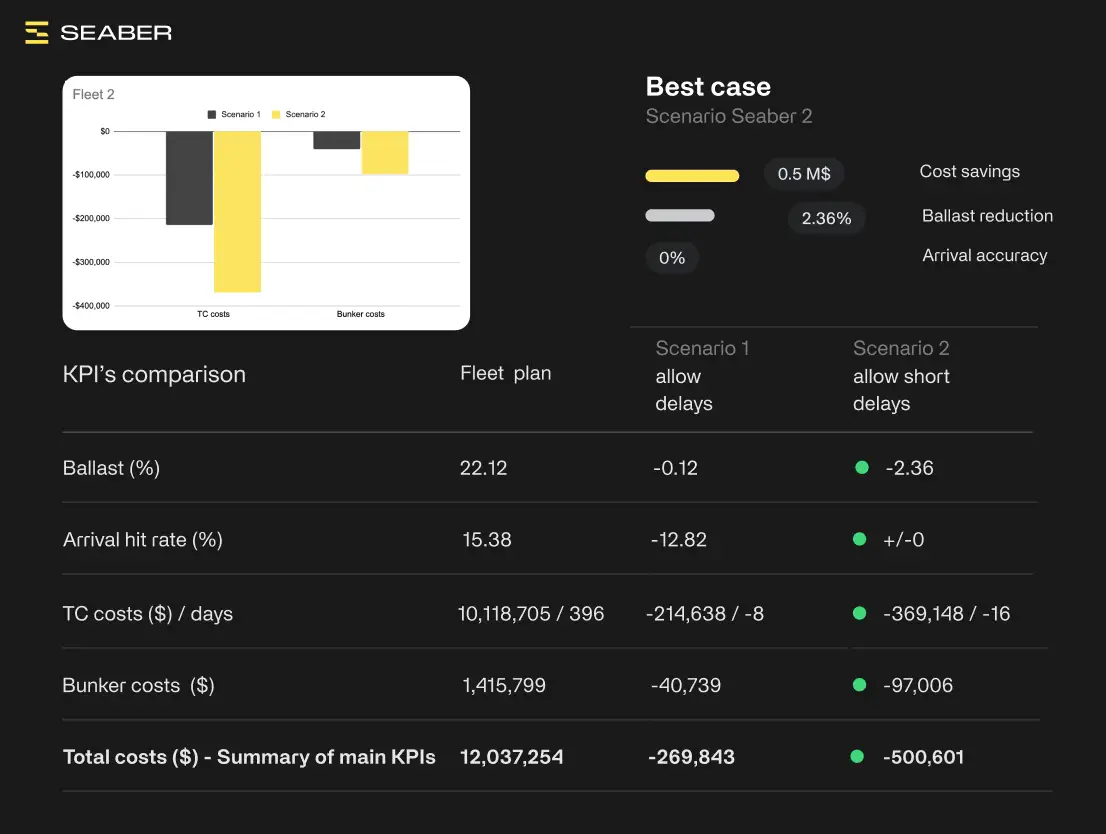
Best case: Scenario 2 with short delays allowed created 4.2% cost savings.

These scenarios proved that modest changes in flexibility, like allowing brief delays, could significantly enhance planning without major operational disruption. Notably, short delays of less than a day delivered better results than delays of 1–2 days.

Other options we have reviewed is re-letting a small number of cargoes that could free up vessels and reduce idle sailing. Re-letting cargoes allows for more efficient vessel utilization by reducing unproductive sailing and minimizing associated costs. It also provides flexibility to adapt to market conditions.

The results indicated that fewer internally controlled vessels might be needed in the long term with more efficient planning. From a chartering perspective, depending on the type of market actor, reducing the size of the own fleet could result in lower operational costs, and more flexibility to seize market opportunities.

feedback

The customer’s reaction was highly positive, both in terms of methodology and results:

→  They appreciated that the results were grounded in their historical data and reflected realistic constraints.

→ One key insight was that their existing fleet size might be larger than necessary, and the study could guide future fleet sizing and renewal strategies.

→ They also noted that actual cost savings could be even higher with access to complete financial data.

KEY LEARNINGS

  • Clarity is critical: Clear voyage rules, cargo-vessel compatibilities, and delay thresholds helped build a robust model.
  • Flexibility brings value: Introducing small allowances (e.g., for delays) creates optimization space with high payoff.
  • Utilizing market vessels unlocked major gains: using the spot market for marginal cargoes improves both cost and fleet availability.
  • Cost focus is pragmatic: Even without precise market pricing, bunker, TC, and port costs provide meaningful performance indicators.
  • AI supports, not replaces, experts: Human review of Seaber’s suggestions was vital for operational realism.
  • Simple visualization: The intuitive user interface is a key enabler of optimization, clearly presenting AI-powered results in a way that empowers planners to act immediately, without added complexity.
Seaber team meeting

From proof-of-concept to standard practice

Step 1: Data preparation & focuss period selection

This anonymized case study demonstrates how a digital planning tool like Seaber can challenge the “optimized by default” mindset with hard data and credible alternatives. The customer now views the platform as a strategic planning partner, not just a scheduling tool.

Future goals include:

  • Testing live planning scenarios with market cargoes
  • Expanding the platform to support spot freight decisions
  • Using results to inform TC renewal negotiations
By adopting AI-powered scheduling, this operator is no longer constrained by spreadsheets. Instead, they’re gaining new insights, reducing costs, and making smarter fleet decisions, one voyage at a time.


Supercharging maritime freight